
AI Agents vs. RPA: Which Automation Strategy Drives Higher ROI in 2026?

TL;DR — Key Takeaways
- • Discover why rigid RPA is hitting a glass ceiling and how reasoning-based AI Agents are creating self-driving businesses with massive ROI.
- • This article covers ai strategies strategies for businesses using AI automation.
- • Zappify.io provides the all-in-one platform to implement these strategies — from CRM to AI agents.
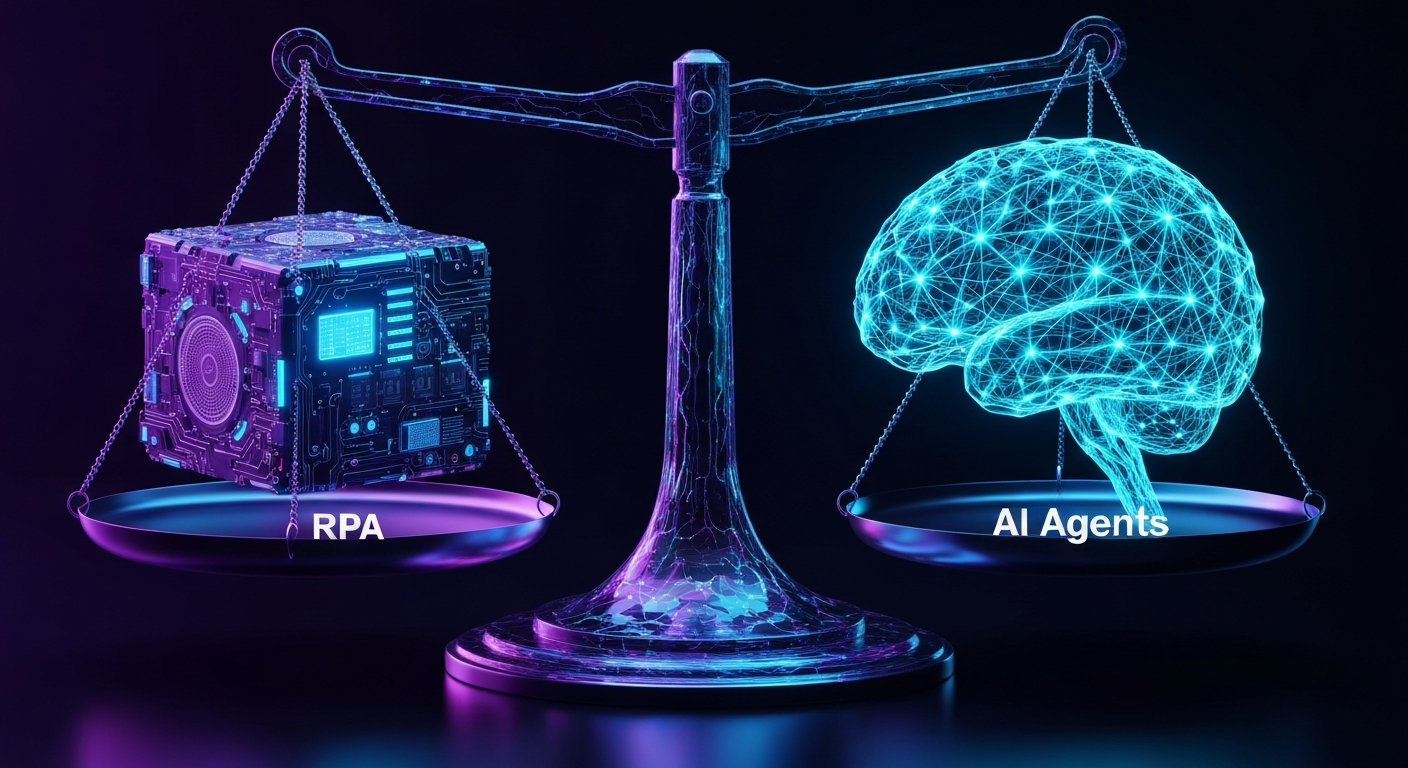
Robotic Process Automation (RPA) relies on rigid, rule-based execution, while AI Agents leverage dynamic, reasoning-based execution.
For the past decade, businesses have chased efficiency through automation. If you are currently using legacy automation tools or simple trigger-action workflows, you have likely experienced the immediate gains—and the inevitable plateau. As we evaluate automation strategies in 2026, the question is no longer whether to automate, but how to automate for the highest return on investment.
The "Glass Ceiling" of Traditional RPA
RPA is phenomenal at moving structured data from point A to point B. It thrives in predictable, unchanging environments.
However, RPA has a severe "glass ceiling." The moment a workflow becomes unpredictable, traditional automation breaks. If a customer sends an email with a typo, or a vendor changes the format of an invoice, the rigid rules of RPA fail. This brittleness leads to constant maintenance, requiring human intervention just to keep the automations running.
The Rise of the AI Agent: Mastering Unstructured Data
This is where AI Agents completely change the financial equation. Unlike RPA, which follows a blind path, AI Agents use Large Language Models (LLMs) to understand context, intent, and nuance.
Agents excel at handling unstructured data—like messy emails, varying customer intents, or complex support tickets. When an AI Agent encounters an unexpected variable, it doesn't crash; it reasons through the problem, uses available tools to find a solution, and adapts on the fly. This reasoning-based execution drastically reduces failure rates and maintenance costs.
ROI Breakdown: AI Agents vs RPA: Which Should You Choose?
| Metric | Traditional RPA | AI Agents |
|---|---|---|
| Setup Speed | Slow (Requires extensive mapping) | Fast (Learns from goals and guidelines) |
| Maintenance Cost | High (Breaks when UI or data changes) | Low (Adapts automatically to variations) |
| Flexibility | Rigid (If/Then only) | Dynamic (Contextual reasoning) |
| Scalability | Linear (1 bot = 1 task) | Exponential (1 agent = multi-step workflows) |
When Should You Choose Which?
Not every process requires an advanced AI Agent. Here is a decision framework to maximize your ROI:
- Choose RPA when: The task is 100% predictable, uses highly structured data (like standard CSV files), and the underlying software interfaces never change.
- Choose AI Agents when: The workflow involves human language, requires decision-making, deals with unstructured data, or needs to adapt to varying customer intents.
The Unified CRM Edge: Building a Self-Driving Business
The true power of Agentic AI is unlocked when it is deeply integrated into your core systems. By embedding these agents into a powerful, unified CRM ecosystem (like Zappify AI), you transition from disjointed automations to a "Self-Driving Business."
Your CRM stops being a passive database and becomes an active participant in your growth—qualifying leads, negotiating times, and resolving issues autonomously.
Ready to Maximize Your Automation ROI?
If you are still relying on fragile, legacy automations, you are losing time and money to maintenance and missed opportunities. The shift to reasoning-based execution is the most profitable move you can make in 2026.
Book a free Automation Audit with Zappify Services today. We will help you identify exactly which legacy processes in your business are ready to be replaced by AI Agents for maximum financial impact.
Frequently Asked Questions
How much does AI automation cost for a Philippine business?
AI Zappify starts at P2,899 per month or P28,990 per year (2 months free). This includes AI chatbot, CRM, appointment booking, email marketing, and social media management — 10 tools in one platform. A 14-day free trial is available with no credit card required.
How long does it take to set up AI automation for my business?
Most businesses are up and running in under an hour. You connect your Facebook Page, set your business hours and services, link your calendar, and the AI is ready. For businesses that want done-for-you setup, Zappify Services handles everything end-to-end.
Can AI automation work with Messenger, SMS, and Viber?
Yes. AI Zappify connects to Facebook Messenger, Instagram DMs, SMS, and Viber in one unified inbox. The AI responds in English, Taglish, or Tagalog — 24/7, instantly. Every conversation is logged in your CRM for follow-up.
Browse by Category
Related Articles

AI Automation for Medical Clinics in the Philippines: Never Lose a Patient
AI automation for medical clinics in the Philippines answers patient inquiries instantly, books appointments automatically, and cuts no-shows with smart reminders — so your secretary never loses a patient again.
AI Automation for Optical Clinics in the Philippines: Turn Past Customers Into Repeat Revenue
AI automation for optical clinics in the Philippines answers frame and eye exam inquiries instantly, books exams automatically, and recalls past customers at 12, 18, and 24 months — turning your dead customer list into repeat revenue.
AI Automation for Dental Clinics in the Philippines: Never Miss a Patient Again
AI automation for dental clinics in the Philippines answers Messenger inquiries instantly, books appointments automatically, and cuts no-shows with smart reminders — so your front desk never loses a patient again.